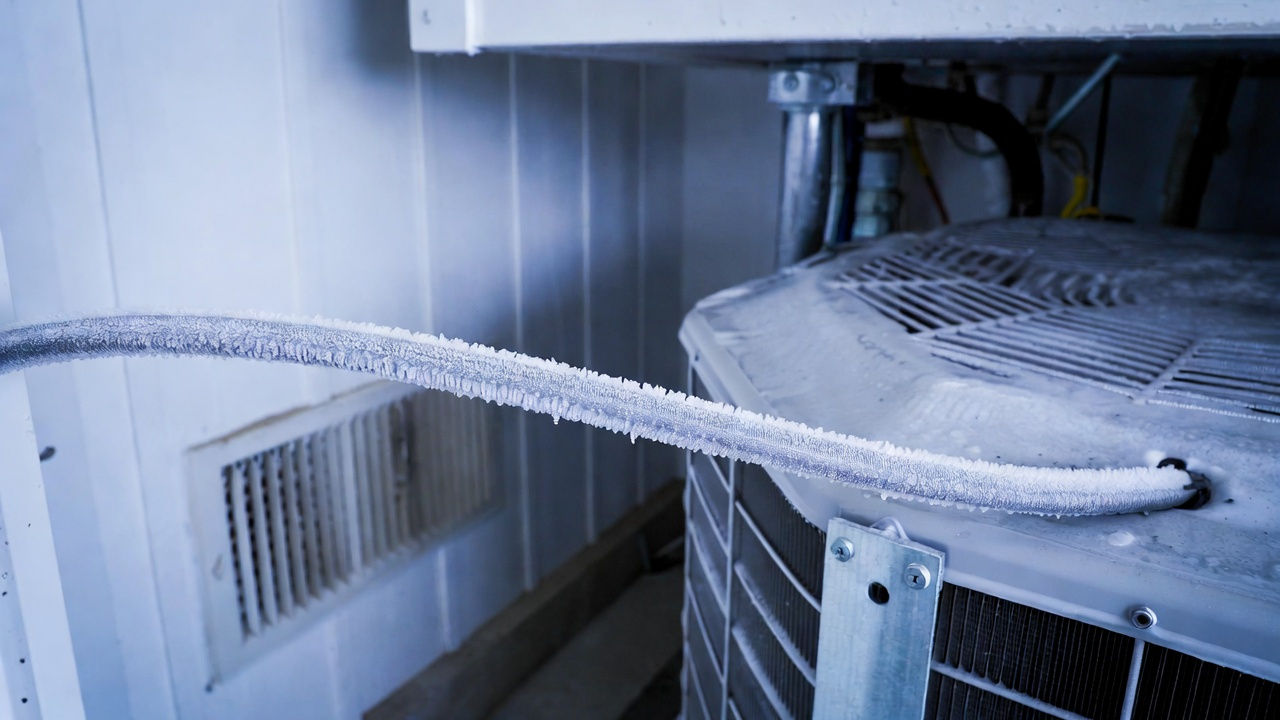
AC freezing in Florida: thaw, filter & MERV checklist
Humidity supplies the moisture. The freeze starts when the coil drops below freezing from weak airflow or low refrigerant. Manufacturers list dirty filters, blocked returns, dirty coils, and leaks first. Thaw it safely first, then work the airflow list below: filter size, dirty media, MERV vs what your slot and blower can handle, and open returns.
Stop DIY and call a licensed HVAC tech if: the coil ices again after a full thaw and a clean correct-size filter; you want a MERV upgrade and do not know what the fan and slot can handle; you see ice with hissing, burning smells, or tripped breakers; anyone wants to “add Freon.” Refrigerant work needs an EPA Section 608–certified tech. Do not pull electrical panels, attach gauges, or DIY charge — hire it out.
Thaw checklist (do this first)
What not to do
Do not keep running Cool while the coil is iced.
Do not chip, scrape, or pour boiling water into the cabinet.
Do not buy a jug of refrigerant and “top it off.”
Filter & airflow checklist (after the thaw)
Tap a box as you go. It stays on this phone until you clear it. Print if you want paper.
Why a dirty filter freezes the coil in Florida
Air has to move across the cold indoor coil. When a filter clogs, airflow drops. The coil can get colder than designed. Florida indoor air carries a lot of moisture. That moisture freezes on. Trane lists restricted airflow — dirty filter, blocked returns, dirty coil — as the biggest reason evaporator coils freeze, ahead of refrigerant problems. That is why the first homeowner move is thaw plus filter, not a Freon can.
Starved airflow. Clogged media or a too-tight filter for the fan cuts CFM across the coil. Coil temperature falls. Ice starts.
Humidity locks it on. Humidity is the moisture that turns into ice — not usually the root cause. Fix airflow first. Then watch for a clean-filter refreeze.
High MERV and pressure drop in plain words
MERV is a particle-capture rating. Higher usually means more stuff gets trapped. EPA’s MERV page says if you upgrade, choose at least MERV 13 — or as high as your system fan and filter slot can accommodate — and you may need a professional HVAC technician. PNNL’s Building America Solution Center guide on high-MERV filters says design for the pressure drop: the filter often contributes about 20%–50% of total system pressure drop, and excessive drop can freeze AC coils and burn out blowers. Filters with deeper pleats or more pleats tend to have lower pressure drop at the same MERV because there is more media area.
Not a universal MERV chart. We do not invent one safe MERV for every Florida house. ENERGY STAR new-home guidance expects MERV 6 or higher; Indoor airPLUS and Zero Energy Ready Home often expect MERV 8 or higher; MERV 13 is often recommended for finer particles and viruses when the system can handle it. Your rack depth and blower matter more than a store shelf claim.
Safe DIY vs hard stop
Homeowner side: Cool Off / Fan On thaw; never chip ice; pull the filter; match the size on the frame; replace if dirty; think about MERV vs slot depth; prefer deeper media when aiming higher MERV if the slot allows; open returns and vents; call if it refreezes. That is the list.
Hard DIY stop: refrigerant charge or leak repair, gauges, air-handler panel guts, and outdoor electrical work. EPA tells homeowners to work with Section 608–certified technicians and to ask for leak repair instead of “topping off.” Do not buy a can and “add a little.” Call a licensed HVAC tech.
This is a homeowner AC-freeze checklist, not a Manual J and not a filter-rack redesign manual. There’s no form here and no shop phone number. Call whoever you already trust.
Common questions
Why is my AC freezing in Florida humidity?
Humidity supplies the moisture. The freeze starts when the coil drops below freezing from weak airflow or low refrigerant. Manufacturers list dirty filters, blocked returns, dirty coils, and leaks first.
Can a dirty air filter freeze an AC in Florida?
Yes. Restricted airflow is the top manufacturer-cited freeze cause, and a clogged filter is the common homeowner fix. Florida humidity freezes onto the cold coil fast. ENERGY STAR: monthly check in heavy-use months.
Can a high MERV filter freeze my AC?
It can if pressure drop is more than the fan and slot were designed for. PNNL BASC: filter often ~20%–50% of system pressure drop; excessive drop can freeze coils. Deeper / more-pleated media usually helps. EPA: consult a tech when upgrading.
What MERV should I use?
No one number for every Florida home. ENERGY STAR new homes: MERV 6+. Indoor airPLUS / ZERH: often MERV 8+. MERV 13 is often discussed for finer particles — only if your system can handle the drop. Ask a licensed HVAC tech.
How do I thaw safely?
Cool Off. Fan On. Do not chip ice. Change a dirty filter. Open vents. Full thaw before restart. Same pattern as Trane and American Standard public troubleshooting.
When should I call a tech?
Refreeze after a clean correct-size filter, MERV upgrade questions, ice with weak cooling / hissing, electrical issues, or any refrigerant. EPA Section 608–certified tech for refrigerant.
U.S. EPA, “What is a MERV rating?”: higher MERV traps more; if upgrading choose MERV 13 or as high as fan/slot can accommodate; may need HVAC pro; replace periodically. epa.gov/indoor-air-quality-iaq/what-merv-rating
PNNL Building America Solution Center, “High-MERV Filters”: design for pressure drop; filter typically ~20%–50% of system PD; excessive PD can freeze AC coils / burn blowers; deeper/more pleats lower PD; ENERGY STAR MERV ≥6; Indoor airPLUS / ZERH MERV ≥8; MERV-13 often recommended for viruses when the system can handle it. basc.pnnl.gov/resource-guides/high-merv-filters
Trane, “What To Do If the AC Evaporator Coil Is Frozen”: biggest reason = restricted airflow (dirty filter, blocked returns, dirty coil, low refrigerant, thermostat); Cool Off; do not chip ice. trane.com/…/evaporator-coil-is-frozen
ENERGY STAR, “Heat & Cool Efficiently”: check filter monthly in heavy-use months; change when dirty; at least every 3 months. energystar.gov/saveathome/heating-cooling
Merged Oct 13, 2026: this page now includes the former dirty-filter / high-MERV freeze guide. Thaw-step sources retrieved Sep 11, 2026: Trane, American Standard, ENERGY STAR, EPA Section 608.